HUB75 vs WS2812B
HUB75 vs WS2812B
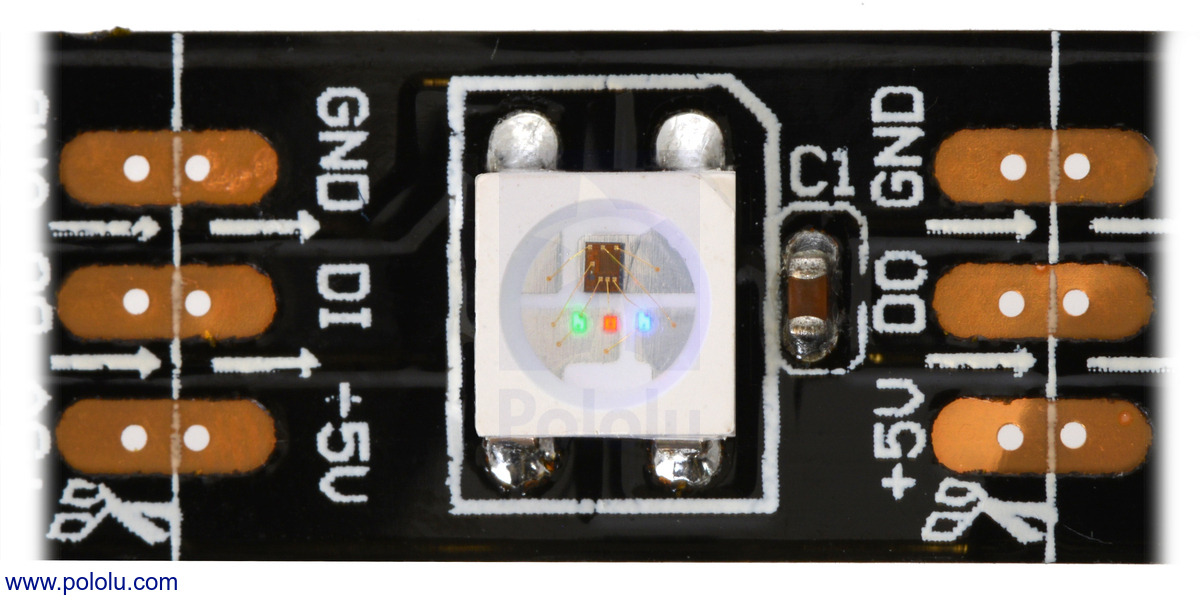
Building an LED matrix? Two technologies dominate: WS2812B strips (cheap, easy, pixel-addressable) and HUB75 RGB panels (fast, high-res, professional). Each has a very different sweet spot.

At a Glance
| Feature | WS2812B Matrix | HUB75 Panel |
|---|---|---|
| Pixel pitch | Strip spacing (10-30mm) | 2-6mm (much tighter) |
| Resolution per panel | Depends on construction | 32×32, 64×64, or 128×64 |
| Refresh rate | ~400 Hz | 1000-4000 Hz |
| Color depth | 8-bit per channel (16M colors) | 8-16 bit per channel |
| Brightness | Medium | Very high (up to 2000 nits) |
| Driving complexity | Simple (1 data wire) | Complex (multiplexed, needs HUB75 library) |
| Cost per pixel | ~$0.03-0.05 | ~$0.08-0.15 |
| Best matrix size | 8×8 to 32×32 | 32×32 to 256×256+ |
WS2812B: The Hobbyist Standard
Pros
- Dead simple — One GPIO pin drives unlimited pixels (daisy-chained)
- WLED support — Full ecosystem, effects, web UI, audio-reactive
- Cheap — ~$0.03/pixel for strips, ~$0.05/pixel for pre-assembled panels
- Flexible layout — Cut strips to any shape, build non-rectangular matrices
- Serpentine wiring — Natural zigzag pattern for simple construction
Cons
- Slow refresh — At 1024 pixels, refresh drops to ~200-400 Hz (visible flicker on camera)
- Limited resolution — Practical max is ~32×32 for a single controller at decent FPS
- Voltage drop — Requires power injection every 2-3 meters
- Pixel spacing — WS2812B strips have minimum ~10mm pitch (even with dense 144 LEDs/m)
HUB75: The Professional Choice
Pros
- Fast refresh — 1000-4000 Hz, completely flicker-free on any camera
- High resolution — 64×64 panels are standard, can tile 16+ panels for massive displays
- Tight pixel pitch — P2 (2mm) to P6 (6mm) for crisp, close-up viewing
- High brightness — Indoor 800-1500 nits, outdoor up to 2000+ nits
- 16-bit color — Smooth gradients, no banding
Cons
- Complex driving — HUB75 is multiplexed (R1, G1, B1, R2, G2, B2, A, B, C, D, CLK, LAT, OE) — needs specific hardware
- ESP32 can’t drive large panels alone — Need a dedicated HUB75 driver (like the ESP32-HUB75-MatrixPanel library + parallel DMA)
- Higher cost — ~$0.08-0.15/pixel
- Rigid panels — Fixed size, harder to create non-rectangular shapes
- No native WLED support — WLED doesn’t natively drive HUB75; needs specialized firmware
Which Should You Choose?
Choose WS2812B When
- You are a beginner (your first matrix project)
- Matrix is 32×32 or smaller
- You want WLED effects, audio reactivity, web UI
- Budget matters — WS2812B wins on cost/pixel
- You need a custom shape (circle, letters, irregular)
Choose HUB75 When
- Matrix is 64×64 or larger
- You need camera-flicker-free operation (video production, events)
- Viewing distance is close (tight pixel pitch needed)
- Professional brightness is required (outdoor, daylight)
- You’re comfortable with Arduino/C++ (not just WLED)
The Bottom Line
WS2812B is the right choice for 90% of hobbyist projects. It’s cheaper, simpler, and the WLED ecosystem is unmatched for features. HUB75 only makes sense when you need high refresh rates (video/camera use), tight pixel pitch (close viewing), or very large displays (64×64+).
For a step-by-step WS2812B matrix build, see LED Matrix Under $100.