DMX vs Pixel LEDs: When to Use Each Protocol
You’ve got a pile of LEDs and need to control them — but should you use a DMX decoder or drive them directly with an ESP32 and WLED? The answer depends on distance, pixel count, refresh rate, and whether you’re integrating with professional lighting gear.

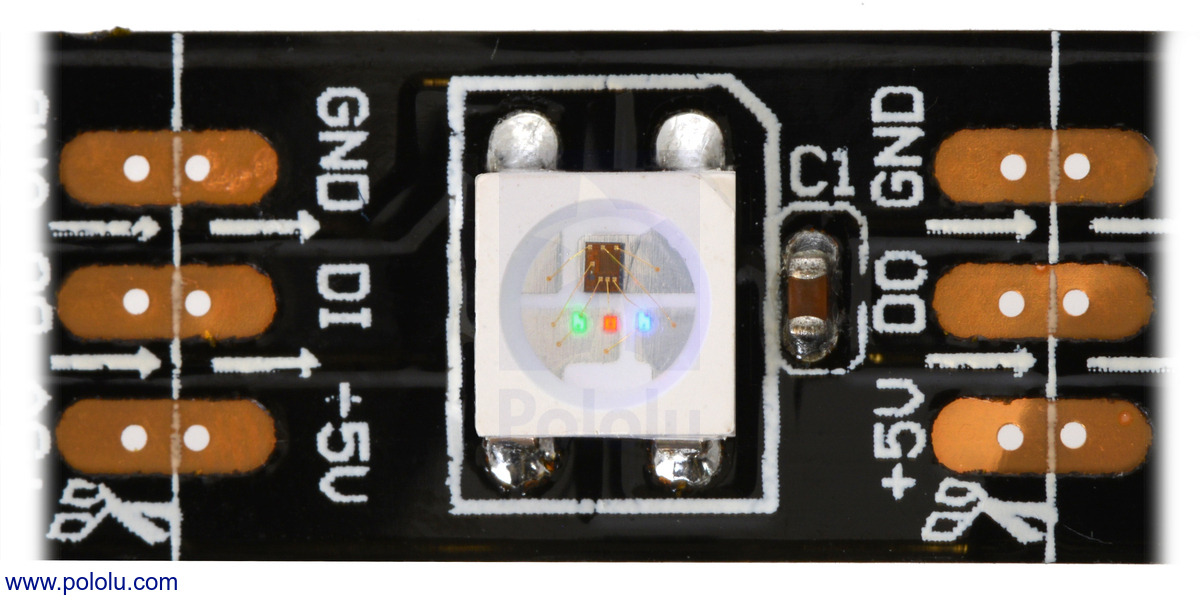
How DMX512 Works with LEDs
DMX512 is the universal language of professional lighting. Each DMX universe carries 512 channels, and every channel is an 8-bit value from 0 to 255. An RGB pixel needs 3 DMX channels (red, green, blue), an RGBW pixel needs 4, and an RGB+CCT (warm white + cool white) pixel needs 5.
A DMX decoder takes these channel values and converts them into a PWM signal for analog LED strips, or passes them through to the data line of an addressable strip. Every pixel on the decoder consumes its own set of addresses — so a 10-pixel RGB strip needs 30 DMX addresses, and a single DMX universe can handle about 170 RGB pixels.
DMX runs at 250 kbps over an RS-485 differential pair — slow by pixel standards, but extremely robust. The balanced signaling means you can run DMX 100 meters or more without signal degradation. Compare that to WS2812B’s single-wire NRZ protocol at 800 kHz, which starts glitching past 5-10 meters without a repeater.
Direct Pixel Control (SPI/NRZ)
Direct pixel control skips the DMX intermediary. An ESP32, Teensy, or Raspberry Pi Pico talks to pixels using their native protocol.
WS2812B uses single-wire NRZ (Non-Return-to-Zero) at 800 kHz. Each bit is encoded as a high pulse of specific duration — 0.4 µs for a 0-bit, 0.8 µs for a 1-bit — with precise timing requirements. One data pin can drive hundreds or thousands of pixels with no universe limit.
APA102 (DotStar) uses 2-wire SPI at up to 24 MHz — 30× faster than WS2812B. The separate clock line means timing is trivial (any SPI-capable microcontroller works), and the 32-bit per-pixel frame gives 5-bit brightness control per channel plus a global 5-bit brightness register. At 24 MHz, a single SPI bus can push 3,000+ pixels at 60 fps.
The trade-off: direct control requires a real-time microcontroller with DMA support. An ESP32 running WLED can drive 500-1000 pixels smoothly, but beyond that you need parallel output (e.g., ESP32’s RMT peripheral with multiple channels) or specialized controller hardware.
When DMX Wins
Long cable runs are DMX’s superpower. With proper termination, RS-485 carries a clean signal 300+ meters. That’s why stadiums, concert venues, and architectural installations use DMX — you run one cable across a truss or through a conduit and decode locally at each fixture.
Existing DMX infrastructure is another reason. If a venue already has DMX cabling, dimmer racks, and a lighting console, adding a DMX LED decoder costs $30 and takes 5 minutes. Rewiring with pixel data lines is impractical.
Dimmer curves and professional fixtures matter in theater, film, and broadcast. DMX controllers offer 16-bit dimming (two channels per color for 65535 levels), fade curves that match incandescent dimming, and RDM (Remote Device Management) for fixture configuration over the DMX line.
Integration with lighting consoles — GrandMA, ETC Eos, Chamsys, Avolites — speaks DMX natively. Pixel LEDs don’t. If you need busking, cue stacks, or timecode sync, DMX is the only direct path.
When Direct Control Wins
High pixel counts favor direct control. Want 2,000 pixels on a house outline? A single ESP32 pin running WS2812B protocol handles that. Doing the same with DMX would require 12 universes and multiple decoders — a substantial cost and complexity jump.
Fast animation — video mapping, music visualization, or chasing effects — needs high refresh rates. WLED and FastLED can push 60+ fps across hundreds of pixels over SPI or NRZ. DMX at 250 kbps starts to bottleneck past a few dozen pixels when you need per-frame updates.
Lower cost per pixel is significant. An ESP32 ($5-10) with a level shifter ($2) drives 500+ pixels directly. A DMX decoder costs $20-60 and still needs a controller upstream. Those decoder costs add up fast in pixel-dense projects.
The WLED/FastLED ecosystem gives you hundreds of effects, audio reactivity, web UI, MQTT, Home Assistant integration, and IR remote control — all in a single firmware. There’s no DMX equivalent of WLED. For standalone installations, direct control is simply more capable out of the box.
Hybrid Approaches
The best projects often use both. The most popular hybrid is Art-Net / sACN → ESP32 → WS2812B. Here, a lighting console sends pixel data over Ethernet (Art-Net can carry multiple DMX universes per Ethernet cable), an ESP32 running WLED or Pixeldriver receives it, and drives the pixels directly. You get DMX ecosystem compatibility with pixel LED speeds and densities.
For short strip runs in a DMX-heavy setup, a small DMX decoder (2-4 universes) next to each pixel cluster keeps the wiring clean. Each decoder handles ~500 pixels, and a single DMX line from the console feeds them all.
Pixel controllers with DMX input — like the Falcon F16v5, Advatek PixLite, or Kulp controllers — bridge both worlds. They take DMX or Art-Net input and drive pixel outputs directly. These are the standard choice for large-scale holiday light shows: the sequencer (xLights) outputs DMX over Ethernet, and the pixel controller handles the pixel driving.
The takeaway: DMX is for integration, pixel protocols are for density. If you’re connecting to a lighting console or running cables over 10 meters, use DMX. If you’re building a standalone installation with hundreds of pixels, go direct. And if you need both — an Art-Net to ESP32 bridge gives you the best of both worlds.